Share Larry N. Ficks's obituary with others.
Invite friends and family to read the obituary and add memories.
Stay updated
We'll notify you when service details or new memories are added.
You're now following this obituary
We'll email you when there are updates.
Select your format and elements to print

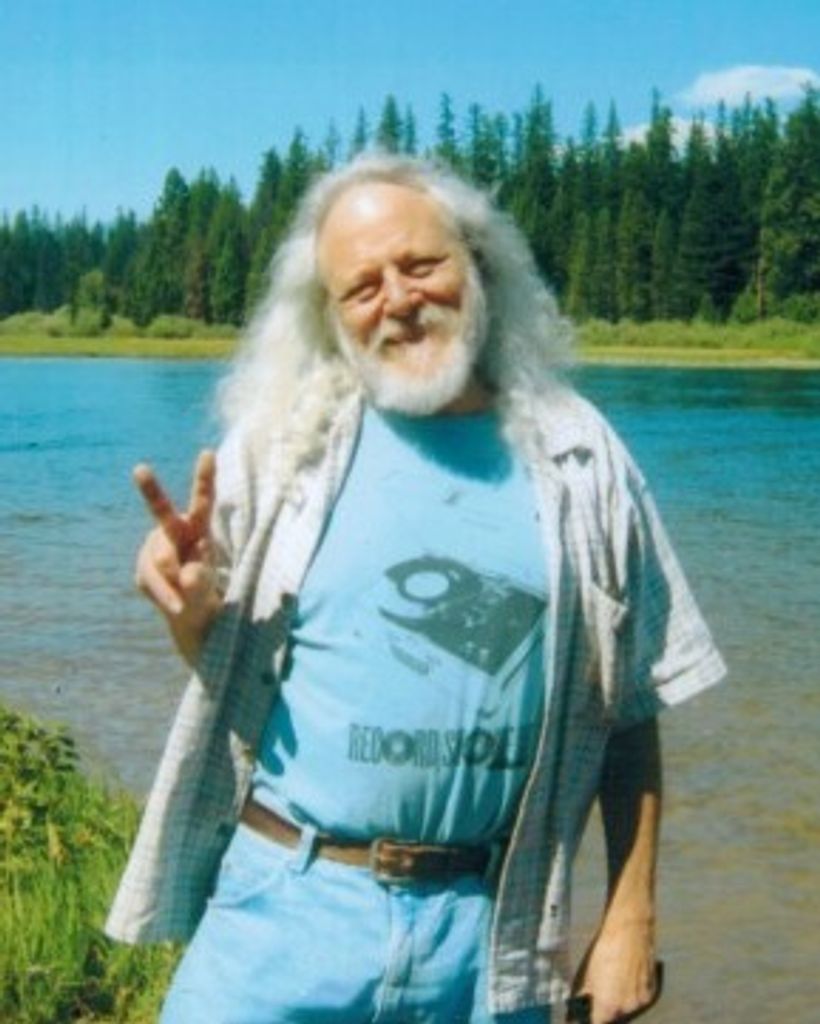


Larry N. Ficks
Sep 14, 1943 — May 19, 2026
Remembering Larry Ficks: Teacher, Activist and Mentor (09.14.1943 – 06.19.2026) By Eliza Carey
The blazing sun beat down on rows of Mississippi crop farms that dotted the fields. Larry Ficks, a 19-year-old from Colorado, climbed out of a chicken coop, packed his few belongings, and set out across the segregated South, helping Black Americans register to vote at great personal risk.
Ficks, a longtime Missoula educator, activist and one of the founders of the alternative high school program Willard, died recently at the age of 82. But the ideals that carried him through the civil rights movement remained with him for the rest of his life.
It was the summer of 1963, in the heart of the Mississippi Summer Voting Rights Project, a precursor to the better-known Freedom Summer of 1964 and the eventual passage of the Voting Rights Act of 1965. At a time when Black Americans in the South were denied the right to vote, Ficks and others risked their lives to change that reality.
Ficks hadn't set out to become a civil rights activist. But as a young White man in an interracial relationship during the 1960s, he had already begun to see the consequences of America's racial divide.
"We didn’t stand a chance in Colorado,” he said. “I mean, it was 1963, so I went with her so I could be with this beautiful woman. I mean, she’s Black, and I’m White, you know, if they saw you alone together, you would get a lot of shit.”
Answering the call of the freedom riders, they boarded a train to Memphis that summer, stepping into a journey that would mark them forever. On June 15, they arrived and began training in non-violent protest, preparing for the hostile landscape they were about to enter.
But locals in Mississippi and Alabama, both White and Black, were not ready for change.
“A lot of people didn’t want us there, even the Black folks, because it was safer to keep to yourself,” Ficks recalled. "Tenant farm owners didn’t even like being tenant owners, but that was the Southern economy. Still, it didn’t stop people from burning crosses or riding by with rifles in their trucks, taunting us.”
Despite the danger, Ficks found moments of beauty and learning. He spent time cooking with families who would take him in, eager to learn about Black American culture and heritage firsthand. "I used it as a cultural experience," he said.
Every day, Ficks and his cohorts would set out to convince Black residents to register to vote. Sometimes, in the tiniest of towns, voter registration happened in the back of a drugstore or grocery store.
"We'd spend the whole day talking them into it. They'd ask, ‘Will I be okay?’ and we'd be like, ‘Well, the police aren’t on our side, but we’ll go with you.’”
Literacy tests were another obstacle, so much so that an "X" was often all that was needed for a signature.
The hostility wasn't limited to back roads and farmhouses. Ficks recounted being refused service in public spaces, with signs pointing to segregated spaces.
He remembered one day particularly clearly.
A young Black woman who was part of the registration drive crew walked into a drug store one afternoon for a milkshake.
Larry and another crew member waited outside. After a few minutes, when the woman hadn’t come out, they went to check on her.
The man, behind the counter, told her, “I’m not waiting on you.” He pointed to a sign over the door. “We don’t serve colored people here.”
She left without a milkshake.
“The next year got much worse,” he said, reflecting on how the violence escalated. When asked to return the following summer, he declined.
On the long ride home to Colorado, on a Harley-Davidson he bought after the summer was over, he came to a realization with himself and American history.
“I realized I didn’t know as much about my own country as I thought I did," he said.
Back at college that fall, Ficks changed his academic focus, diving into directed history and anthropology classes. He became heavily involved in the growing civil rights movement on campus, setting up information tables, recruiting support, and embracing a more radical political identity.
By 1969, as the Vietnam War draft was implemented, he stood his ground as a conscientious objector. “They put every date on a ping pong ball for the draft lottery. The first ball they pulled was September 14, which is my birthday. Everyone was calling me like ‘Larry, Larry, you got drafted,’ but I sat back knowing I wasn’t going anywhere.”
Ficks worked hard to support the lives of Black Americans in his younger years, and later in life, supported the lives of Missoula high school students by writing the grant that commenced Willard Alternative High School.
“I just always wanted to be a teacher that students felt safe with,” he said. He is still in touch with some of his students to this day, who sometimes even call him for advice.
His son, Jesse Ficks, a film professor in San Francisco, said his father really inspired young people and students because “he was a genuine weirdo.”
Jesse was a student in one of his father’s classes as a high schooler. He recalled a day when he was teaching about whales. “He started to make whale sounds and talk like a whale in front of the class. I just remember all the kids turning around and looking at me. Of course, it was embarrassing, but I just remember thinking, ‘that’s just my dad.’”
Or rather, “that’s just Larry.” Ficks consistently told his children and students not to call him dad or Mr. Ficks, but to call him by his name.
Jesse has remained inspired by his father’s nonconformist ways of living and remembers these details fondly. (He walks through the world with the same kind smile as his dad’s stretching across his face.)
Jesse concluded, “Larry’s marriage partner of 51 years, Prudence Hawthorne (my mother) and I have always been inspired by his desire to look at things in a way most people don’t.”
Ficks continued to look at things differently, even into his older age. For the past four years, he was part of a men's group that meets monthly.
“It’s a camaraderie most men don’t have,” Ficks said.
This group, and many others like it across the nation, aim to loosen up the preconceived notions of what male relationships should look like through sharing insecurities, tough life obstacles and mental health struggles with one another.
Ficks had tried twice in the past to join other groups, but nothing stuck until this one. He was the oldest in the group by 10 years. One 40-year-old member (who has asked to remain anonymous) said, “We are the luckiest men’s group in the country because we have an elder in ours.”
For the past 30 years, Larry was surrounded by the growing trees in the yard: a black hills spruce, a chokecherry tree, an American mountain ash, a burr oak tree, and a giant Colorado spruce. Jazz from the 1960s and 70s often drifted through the house as he would sit with a cup of Pu-erh tea, reading a book and tending to his cat while listening to birds sing from branch to branch.
A Celebration of Larry Ficks will be held on Sunday, July 12 from 1:00-3:00pm. We are gathering at the Clark Fork River just across the Van Buren footbridge at the Offleash Dogpark on Jacob's Island. (Enter from either the end of Van Buren Street next to Albertsons or from the campus side near the stadium.)
Casual in every way, afternoon will include a listening party of Larry's farewell mixtape, a table of handpicked mementos (first come, first serve) and sharing memorable moments throughout. Water provided. Bring a chair, blanket or picnic lunch if desired.
Guestbook
Visits: 1147
This site is protected by reCAPTCHA and the
Google Privacy Policy and Terms of Service apply.
Service map data © OpenStreetMap contributors